Thinking about a barndominium near Jones but not sure how it stacks up to a traditional house? If you want acreage, room for gear, and a shop you can really use, the idea is tempting. At the same time, financing, appraisal, insurance, and resale work a little differently with these properties. In this guide, you’ll learn the key differences, what lenders and insurers look for, and how to set yourself up for a smooth purchase in the Jones area. Let’s dive in.
What is a barndominium?
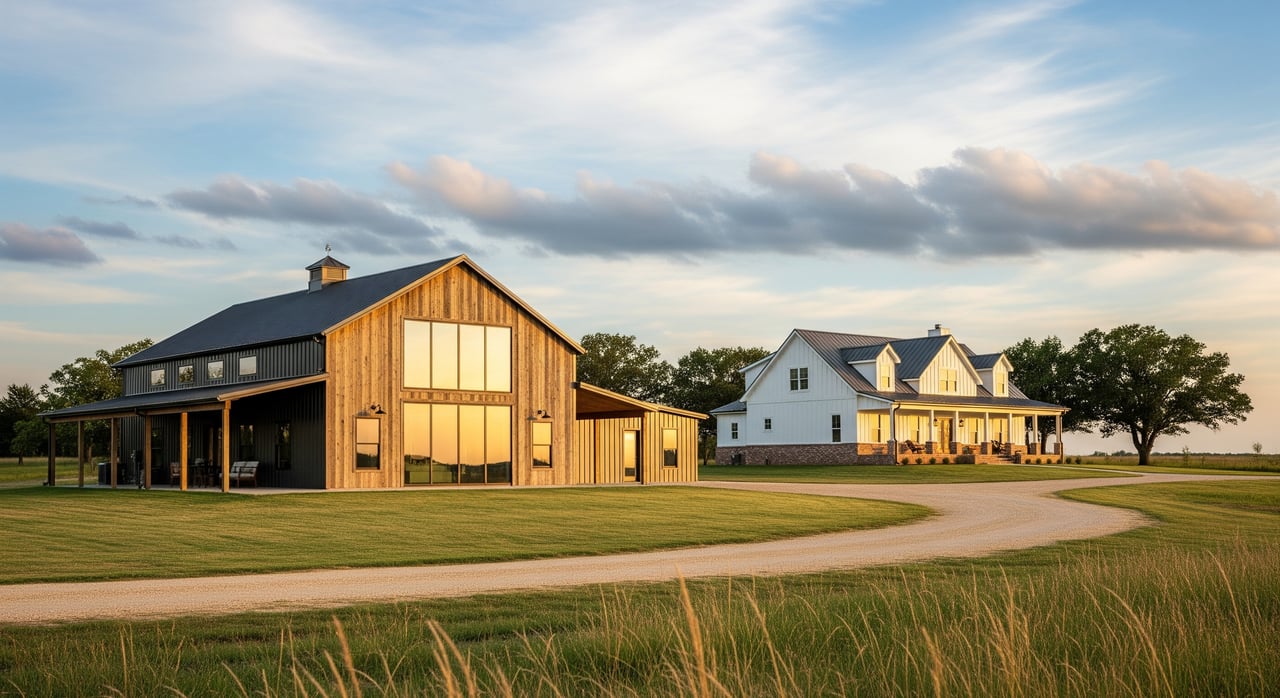
A barndominium is a metal-building or post-frame structure with living space integrated into a shop or garage. In the Jones area, buyers often consider them for vehicles, equipment, hobbies, or small agricultural use on acreage.
Common types you’ll see:
- Metal building kit on a concrete slab with framed interior living spaces.
- Pole-barn style with post-frame construction and framed rooms.
- Hybrid with a conventional wood-framed living wing attached to a metal shop.
What matters to lenders, appraisers, and insurers:
- Permanent foundation and proper connection to utilities, including permitted well and septic when applicable.
- Local code compliance and passed inspections.
- Interior finish quality, from basic to high-end.
- Shop use. Business operations can change insurance needs and risk.
Barndominium vs house: what changes
You can finance, insure, and resell either option in the Jones area, but the path can look different.
- Financing: Traditional homes usually follow familiar loan routes. Barndominiums can qualify for conventional, FHA, VA, or USDA Rural Development loans if they meet program standards, but lenders tend to ask for more documentation. New construction often uses construction-to-permanent loans.
- Appraisal: Traditional homes have deeper pools of comparable sales. Barndominiums sometimes lack nearby true comps, so appraisers may lean on the cost approach and adjust for the shop component.
- Insurance: Standard homeowners coverage can work for an owner-occupied barndominium, but business activities in the shop often require endorsements or separate commercial policies. Weather risks like wind and hail factor into premiums across central Oklahoma.
- Maintenance: Conventional homes have familiar maintenance patterns. Metal buildings need attention to condensation control, corrosion points, sealants, roof insulation, and slab care.
- Resale: Traditional homes appeal broadly. Barndominiums have a defined buyer pool that values integrated workspace. Finish quality and clear documentation can widen appeal.
Financing paths in the Jones area
If the property is a complete, code-compliant single-family dwelling on a permanent foundation, you can often pursue:
Conventional loans
Conventional financing is possible when the home meets habitability standards and the appraiser can support value. Underwriting and appraiser guidance drive eligibility.
FHA and VA
These can work if the structure meets program requirements for habitability, permanent foundation, and utilities. Some lenders and appraisers are more conservative with nontraditional construction, so expect extra scrutiny.
USDA Rural Development
USDA loans can be attractive on the OKC fringe. Parcels must be in eligible rural areas and meet program property standards. Check eligibility early in your search.
Construction-to-permanent
For new builds, one-time-close construction loans are common. Lenders will require plans, budgets, builder qualifications, and draw schedules. The loan converts to a permanent mortgage once the home is complete and passes inspections.
Portfolio and local lenders
Local community banks and credit unions that understand rural construction can be more flexible with nonstandard builds, including owner-builder scenarios.
What lenders will request
- Proof of a permanent foundation and code-compliant construction.
- Evidence of utilities that meet habitability standards, including permitted well and septic when applicable.
- An appraisal that supports value, which can be the sticking point.
- For new construction: full plans, specs, budgets, builder qualifications, and a draw schedule.
Tips to improve approval odds
- Gather permits, inspections, plans, and contractor credentials upfront.
- If buying an existing barndo, verify the permit history and utility approvals early.
- Ask each lender about experience with barndominiums, especially in the OKC metro and fringe communities.
Appraisal and valuation basics
Appraising a barndominium can be more complex than a traditional home because comparable sales are fewer.
What appraisers consider:
- Comparable sales. If true barndo comps are scarce, the appraiser may compare the finished living spaces to conventional homes and value the shop separately.
- Cost approach. For unique or newer builds, replacement cost less depreciation can carry more weight.
- Finish quality. High-quality finishes and conventional systems help value align more closely with stick-built homes.
- Shop square footage. Living area typically carries higher value per square foot than shop or utility space.
How you can help the process:
- Provide construction plans, permits, receipts, warranties, photos of the build, and utility approvals.
- Consider a pre-purchase appraisal review if the property is especially unique.
- Choose a lender who uses appraisers with rural and specialty-property experience in the OKC area.
Insurance and property taxes
Insurance is often available for owner-occupied barndominiums that function as single-family residences. Underwriting differs when the shop supports business use or contains specialty equipment.
Key points to review with your insurer:
- Policy type. A standard homeowners policy may work, but confirm acceptance of metal buildings and attached shop areas.
- Business use. If you run a business from the shop or store tools, inventory, or specialty equipment, you may need commercial liability, business property coverage, or specific endorsements.
- Weather risk. Central Oklahoma’s wind and hail exposure can affect deductibles and premiums.
- Flood exposure. If any part of the parcel is in a floodplain and you have a federally backed loan, flood insurance is required. Even without a loan, it can be a prudent choice.
Property taxes:
- The county assessor will classify and assess both the living area and shop improvements. Ask how mixed-use shop/house buildings are handled so you can budget accurately.
Maintenance and utilities on acreage
Metal buildings perform well when designed for our climate and maintained on schedule.
Building performance tips:
- Insulation and moisture control. Plan for condensation control. Approaches like spray foam or batt with a proper vapor barrier improve comfort and energy use.
- HVAC planning. Large shop volumes drive load. Many owners use separate systems for shop and living spaces to control costs.
- Durability. Watch for corrosion at penetrations and fasteners, keep sealants in good condition, and maintain guttering. Keep the concrete slab sealed and joints maintained.
Rural utilities:
- Well and septic. Confirm permits, setback rules, and soil testing with the health department. Plan for routine septic pump-outs and water testing.
- Access. Consider driveway maintenance, county road standards, and heavier vehicle traffic if the shop will see equipment use.
- Power and backup. Evaluate electrical capacity and whether generators make sense for outages.
Resale and marketability near OKC
Barndominiums sell to a defined buyer pool. In the Jones area, integrated shop space is a strong draw for tradespeople, hobbyists, small-scale agricultural users, and buyers seeking flexible storage. At the same time, some buyers prefer traditional aesthetics and layouts.
Factors that support resale:
- Finish quality. A well-finished interior with conventional systems broadens appeal.
- Documentation. Clear permits, inspections, build photos, and warranties build confidence.
- Positioning. Marketing that highlights usable shop features and the separation between living and shop systems helps buyers see the value.
Pricing considerations:
- Appraisers and buyers typically value finished living area most, with shop space adding functional value at a lower rate per square foot. Local demand for acreage with shops in the OKC metro will influence both timing and price.
Local due diligence checklist
Before you buy or build near Jones, cover these steps:
- Jurisdiction and permits. Confirm whether the Town of Jones or the county is your permitting authority. Ask about building inspections and timelines.
- Zoning and use. Verify allowed shop activities, including any business operations or agricultural uses.
- Utilities. Identify water source (public or well), sewer/septic requirements, electrical capacity, and internet or cell service options.
- Floodplain and drainage. Review FEMA maps and understand drainage needs for larger roof and driveway areas.
- Road access. Check county maintenance, weight limits, and any easements.
- Taxes and classification. Ask the county assessor how a shop/house combo will be assessed.
- Insurance quotes. Get pre-approval based on your intended shop use and equipment.
- Title and restrictions. Review deed restrictions, covenants, or HOA rules that affect shop size, materials, or exterior finishes.
If you plan to build:
- Vet builder qualifications and references, and use a detailed contract with scope, specs, and timeline.
- Develop full plans, a foundation design, and an insulation and energy plan.
- Set a schedule of inspections, and keep a folder of passed inspections and paid invoices.
- Hold a contingency reserve for overruns and weather delays.
Which option fits your goals?
Choose a barndominium if you want:
- Integrated, high-function shop space for equipment, vehicles, or hobbies.
- Flexible acreage use that rural zoning can support.
- The potential for lower cost per square foot for living area, depending on finishes and systems.
Choose a traditional house if you prefer:
- A familiar path for financing, appraisal, and insurance with fewer documentation hurdles.
- Broader buyer appeal for future resale.
- A conventional floor plan without a large shop component.
The right choice comes down to how you plan to live and work on the property. With clear documentation, smart planning, and the right lender and insurer, both options can work well in the Jones area.
Next steps
If a shop-with-home setup fits your lifestyle, start by confirming jurisdiction and utilities on the parcel, then speak with at least two lenders about eligibility and documentation. If you lean toward a traditional home, focus on appraisal patterns and resale in your preferred neighborhood. Either way, having a local guide who understands acreage and the OKC fringe can save you time and reduce risk. When you are ready, reach out to Allison Wanjon to walk through financing paths, property due diligence, and a search plan that fits your goals.
FAQs
Can I get an FHA or VA loan for a barndominium near Jones?
- Possibly, if the home has a permanent foundation, utilities that meet program standards, and an appraiser who accepts the construction type.
How will a barndominium be appraised compared to a traditional house?
- Appraisers may compare finished living space to conventional homes and value the shop separately, or use the cost approach when true barndo comps are limited.
What insurance do I need if I run a business from the shop area?
- Standard homeowners policies often exclude business liability and equipment, so you may need endorsements or separate commercial coverage.
Are barndominiums harder to resell in the OKC fringe?
- They sell to a defined buyer pool, and resale improves with high-quality finishes, clear permits and inspections, and targeted marketing that highlights the shop.
What maintenance is unique to metal-building homes on acreage?
- Pay special attention to condensation control, roof and wall insulation, corrosion points and sealants, and concrete slab care, along with routine well and septic service.
What due diligence should I complete before building a barndominium near Jones?
- Confirm permitting authority, zoning and allowed uses, utility availability, floodplain status, road access, tax classification, insurance quotes, and any title restrictions.