Thinking about a few chickens, a garden, and maybe enough room for a horse or two near Crescent? A small hobby farm can be a great fit for the way you want to live, but the right property depends on more than just finding a few acres. Before you buy, it helps to understand which rules apply, how the land can support your plans, and what infrastructure needs to be in place. Let’s dive in.
Start With Location Rules
One of the first things you need to confirm is whether a property is inside Crescent city limits or in unincorporated Logan County. That single detail can shape what comes next for permits, building plans, utilities, and future improvements.
In unincorporated Logan County, the county states that there are no planning, zoning, permitting, or inspection requirements in those areas. Inside Crescent city limits, the city maintains a code, zoning map, and building department, so your project may have different review steps.
If you are considering building a home, barn, shop, or detached structure inside Crescent, the city’s residential permit application shows that you may need to provide a plot plan, floor plan, and elevation. If septic or an aerobic system is involved, the city also asks for a signed DEQ form when applicable.
The city application also notes that a county-stamped deed is required for unplatted addresses and that a building cannot be occupied without a certificate of occupancy. That makes it smart to verify paperwork early instead of waiting until you are ready to build.
Check Access Before You Close
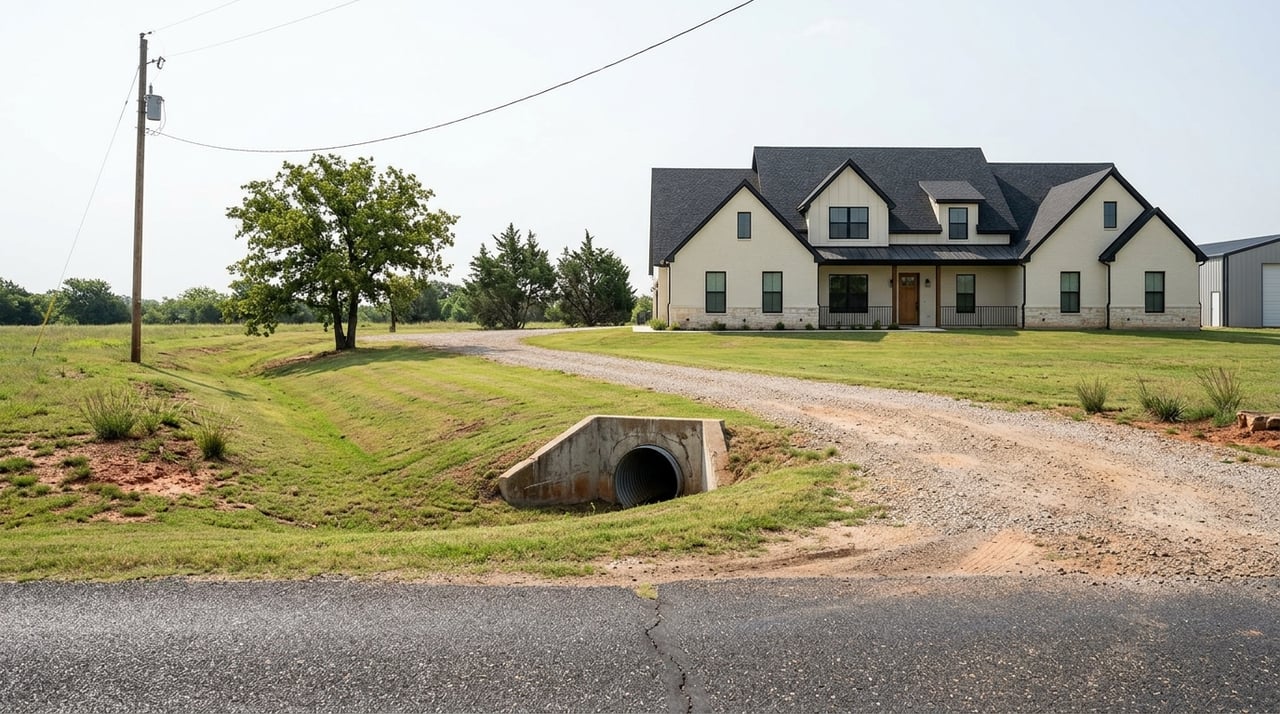
A pretty parcel does not help much if access is complicated. In Logan County, a road-crossing permit is required when your project crosses a county road or uses county right-of-way.
That can matter for a driveway, utility line, culvert, or other improvements that touch county infrastructure. If you are buying land for a hobby farm, access should be part of your due diligence from day one.
Match Acreage to Your Real Plans
It is easy to picture the lifestyle first and the land second. In reality, the best hobby-farm setup starts with a realistic match between the land and what you want it to support.
Oklahoma State University Extension explains that stocking rate should match the land’s carrying capacity, forage production, and grazing season. In simple terms, there is no one-size-fits-all answer to how many animals a property can handle.
That is especially important if you are thinking about cattle. OSU uses a 1,000-pound cow as the base animal unit for stocking-rate calculations, and it notes that forage production can change from year to year based on precipitation.
So if you are asking, “Can this land handle a few cows?” the better question is, “How much forage will this land produce, and how consistent is it?” A property that works in one season may feel very different in a dry year.
What Horse Buyers Should Know
Horse properties also vary more than many buyers expect. OSU notes that under controlled grazing, thick and productive bermudagrass may support 1 mature horse per 1 to 1.5 acres, while unimproved native grass pasture in Oklahoma may require 5 to 10 acres per horse.
That range shows why acreage alone is not enough. Two five-acre properties can offer very different outcomes depending on pasture quality and management.
Gardens Matter Too
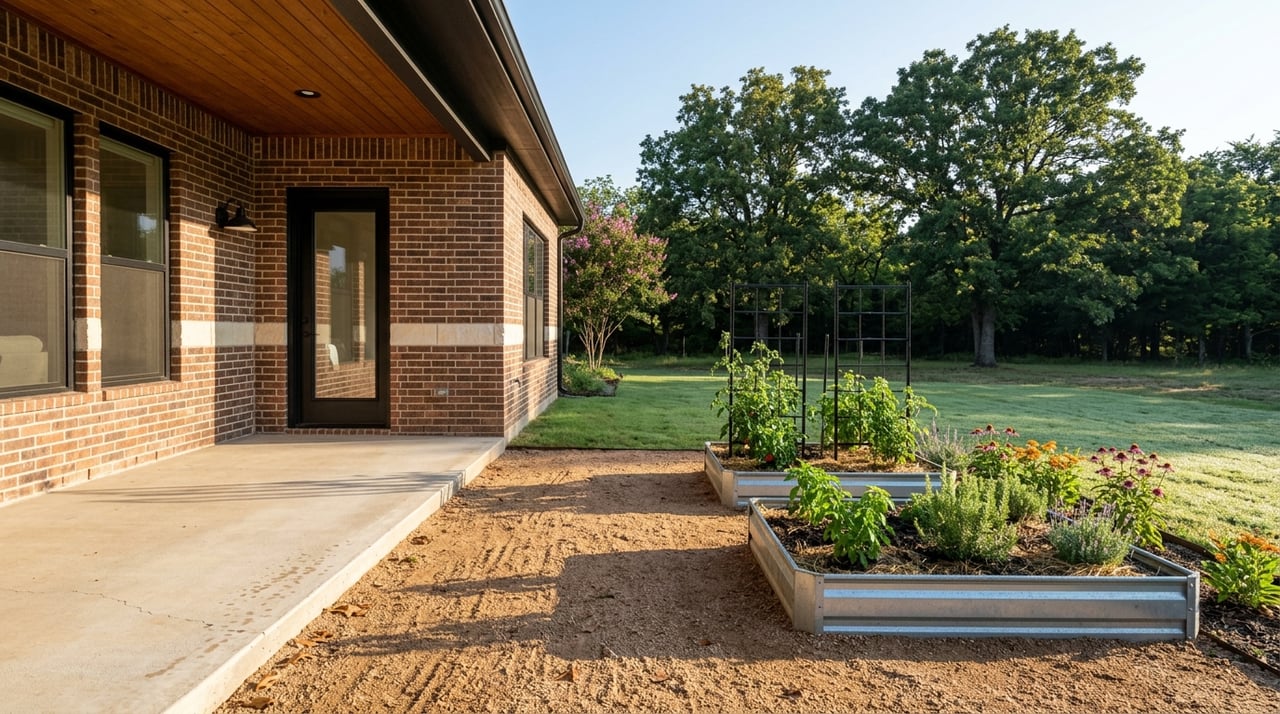
If your vision includes raised beds, fruit trees, or a larger garden, water rules should be part of your planning. The Oklahoma Water Resources Board says domestic use includes irrigation of up to 3 acres for gardens, orchards, and lawns, along with household use and water for farm and domestic animals up to the land’s normal grazing capacity.
Uses beyond domestic use generally require a water permit. That is an important line to understand if you want a property that supports both animals and a productive garden.
Plan the Basic Infrastructure
A hobby farm works best when the basics are already in place or clearly possible. Before you get too attached to a property, take a close look at fencing, water, waste systems, and structures.
Fencing Needs to Fit the Animals
Oklahoma law sets a lawful fence standard in Title 4 of the Oklahoma Statutes. The law lays out minimum standards for line and partition fences, and it specifically notes that adjoining owners who both use a fence to restrain swine, goats, or sheep must each keep their share tight enough to restrain those animals.
That matters because not all fencing works for every setup. If your plans include goats, sheep, or other livestock that challenge weak boundaries, fence design is not a detail to figure out later.
OSU Extension also recommends planning fencing with both containment and safety in mind. It notes that fence choice should take into account the species, surrounding conditions, and whether the fence is a boundary line or an interior pasture division.
Water and Wells
For many buyers, water is one of the biggest questions on acreage. The Oklahoma Water Resources Board states that domestic groundwater use does not require a permit, while non-domestic use does.
It also says domestic groundwater wells used for household purposes, livestock up to the land’s grazing capacity, and irrigation of less than 3 acres do not require an intent-to-drill authorization. That can make a big difference when you are comparing a small lifestyle property to a more intensive agricultural use.
Septic and Wastewater
If a property will rely on an on-site sewage system, do not treat that as a minor box to check. Oklahoma DEQ describes on-site sewage treatment as a three-step process that includes soil profiling, authorization to construct, and ongoing maintenance such as periodic pumping.
That lines up with Crescent’s permit process, which requires a signed DEQ form for septic or aerobic systems when applicable. If the property needs a new system or changes to an existing one, you will want clear answers before closing.
Poultry Structures and Coops
If your dream is more garden-and-chickens than cattle-and-pasture, housing still matters. OSU says poultry structures should protect birds from heat, cold, weather, and predators, and that a dry, draft-free house with ventilation is essential.
For laying hens, OSU recommends about 1.5 to 2 square feet per bird inside the house and 8 to 10 square feet per bird in the run if the birds are confined. Even on a small property, enough space and a practical setup can make a big difference.
Think Through Your Animal Mix
Many buyers near Crescent are not looking for a full-scale farm. They want a manageable setup with a few animals, some outdoor space, and room to enjoy the property.
That is why your animal mix matters just as much as your acreage total. Chickens, horses, and cattle all use land differently, and each one comes with its own space, fencing, water, and shelter needs.
For chickens, OSU points to practical basics like housing, ventilation, fresh clean water, dry litter, and enough space to reduce stress and disease. If you plan to process birds for direct sale, OSU also notes that processing more than 250 turkeys or 1,000 chickens per year for direct sales to in-state household consumers requires state inspection through the Oklahoma Department of Agriculture, Food and Forestry.
For cattle, pasture management is the key issue. For horses, pasture quality can quickly change whether a property feels comfortable or crowded. For a mixed-use hobby farm, the land has to support the whole picture, not just one feature.
Review Land Records Early
Acreage transactions often involve questions that do not come up with a typical in-town home purchase. Logan County’s clerk information notes that land records are available through the county clerk, and mineral searches may require separate review of the deed and legal description.
That means deed review, legal description details, and possible mineral-rights questions deserve attention early in the process. On rural and small-farm properties, these details are part of smart planning.
A Simple Due-Diligence Checklist
Before you buy a hobby-farm property near Crescent, make time to confirm the basics:
- Verify whether the parcel is inside Crescent city limits or in unincorporated Logan County.
- Check city zoning and building requirements if the property is inside Crescent.
- Review the deed, legal description, and any mineral-rights questions.
- Confirm access, driveway plans, and any county road or right-of-way crossing needs.
- Ask about the water source and whether the property has a workable plan for domestic use.
- Confirm septic or aerobic system details and any DEQ-related paperwork.
- Match fencing and pasture layout to the animals you actually plan to keep.
- Think through how much garden space, animal space, and utility infrastructure you will need together.
The best hobby-farm properties are often not the flashiest ones. They are the properties where the basics already make sense and where your plans fit the land without forcing expensive surprises later.
If you are looking for acreage near Crescent and want practical guidance on access, utilities, land use, and what to watch for before you buy, Allison Wanjon is here to help you begin your story at home.
FAQs
What should you verify first on a hobby-farm property near Crescent?
- You should first verify whether the property is inside Crescent city limits or in unincorporated Logan County, because that affects zoning, permitting, and building requirements.
What water use is considered domestic on a small hobby farm in Oklahoma?
- Domestic use includes household water, animals up to the land’s normal grazing capacity, and irrigation of up to 3 acres for gardens, orchards, and lawns.
What should you know about fencing for hobby-farm animals in Oklahoma?
- Oklahoma has lawful fence standards, and fencing should be designed for the specific animals you plan to keep, especially for goats, sheep, or other livestock that require tighter containment.
What should you ask about septic on a Crescent-area acreage property?
- You should ask whether the property has an existing septic or aerobic system, whether DEQ paperwork is available, and what may be required if you plan to build or modify improvements.
How much land do you need for horses near Crescent?
- It depends on pasture quality and management, with OSU noting that productive bermudagrass under controlled grazing may support 1 horse per 1 to 1.5 acres, while unimproved native grass pasture may require 5 to 10 acres per horse.
Why do deed and mineral-rights questions matter on acreage near Crescent?
- Rural land purchases can involve separate issues tied to the deed, legal description, and mineral rights, so reviewing county land records early can help you avoid surprises.