Thinking about building a barndominium near Cashion? It can be an exciting idea, especially if you want more space, flexibility, or a custom setup on rural land. But before you start refining floor plans or pricing out finishes, you need to know whether the land can legally and practically support the build. The good news is that a little due diligence up front can save you time, money, and stress later. Let’s dive in.
Start With Jurisdiction
One of the biggest first steps is confirming whether the parcel is inside Cashion town limits or in unincorporated Kingfisher County. That single detail can change the entire path of your project.
According to the Town of Cashion, the town has planning, zoning, residential permits, property-line requirements, and adopted building codes through its Planning, Zoning & Development and city codes resources. In unincorporated Kingfisher County, the county states there are no implemented general zoning restrictions, separate building codes, code enforcement, or certificates of occupancy, though floodplain rules still apply in FEMA special flood hazard areas.
That means you should not assume a vacant lot near Cashion is automatically ready for a barndominium just because it looks open and buildable. The parcel’s jurisdiction tells you what approvals, reviews, and restrictions may come into play before construction begins.
Check Floodplain Status Early
Floodplain status is one of the most important site-screening items for rural land. If a parcel falls within a FEMA special flood hazard area, Kingfisher County requires a development permit.
The county’s floodplain regulations note that an application may require scaled plans, elevations, and details about drainage changes. If you are planning a custom build, this is not something to leave for later. It is far better to know early whether floodplain rules will affect placement, design, timelines, or overall cost.
Legal Access Matters More Than You Think
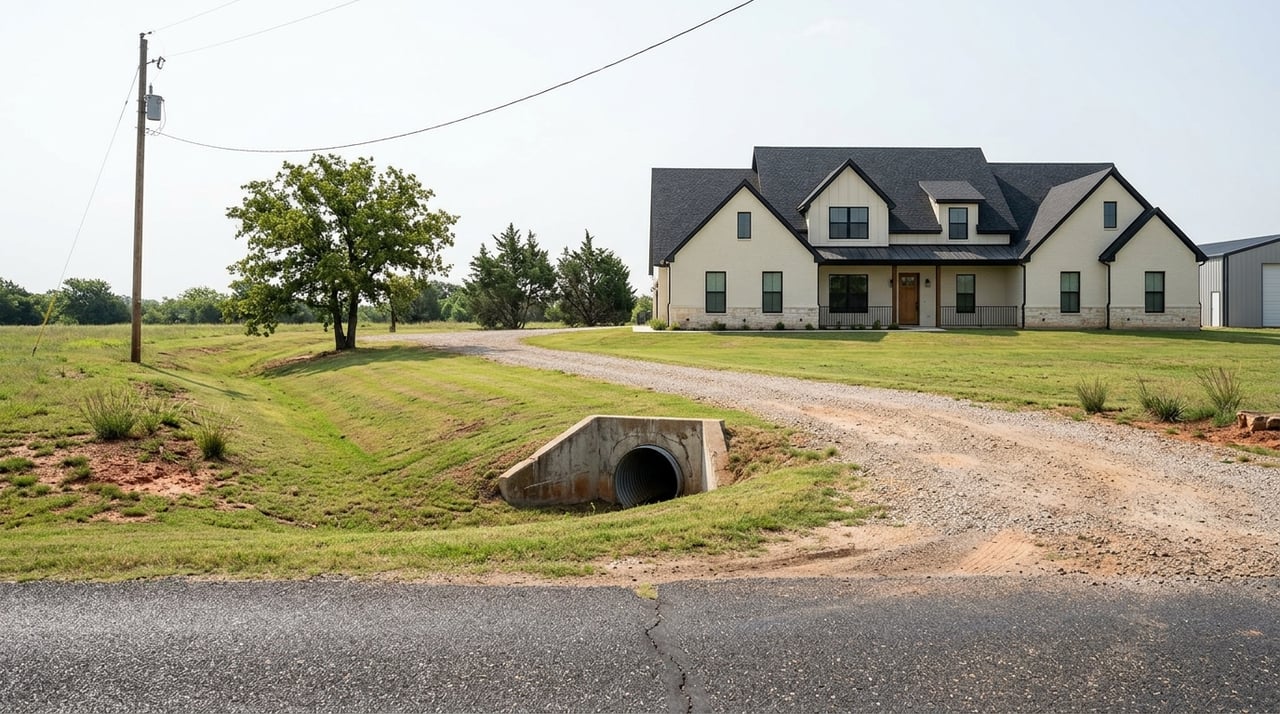
A parcel can look perfect on a map and still have real access problems. For a barndominium build, legal access is essential because it affects your driveway, utility installation, construction traffic, and long-term usability.
Oklahoma State University’s land-buying guidance recommends checking access across another person’s property, road quality, drainage, easements, wetlands, and whether the parcel actually fits your intended use. You can review that guidance in OSU’s resource guide for Oklahoma land buyers.
If access depends on a private road or a recorded easement, you want to understand that before you make an offer. A beautiful homesite is much less practical if getting to it is complicated or uncertain.
Read the Title Work Carefully
When you are buying land for a custom build, title work is more than a formality. It can reveal restrictions that directly affect whether your barndominium plan works on that site.
The Consumer Financial Protection Bureau explains that title evidence may identify easements, covenants, conditions, reservations, limitations, or restrictions of record. Its guidance also notes that restrictive covenants can require approvals or impose building deadlines, and reserved mineral rights can affect the use, enjoyment, and value of the land. You can see that in the CFPB’s title evidence guidance.
In practical terms, a parcel may appear wide open but still have a drainage easement, road agreement, covenant limitation, or mineral reservation that changes where you can place the home, shop, driveway, or septic system. This is one of the most common reasons buyers need to slow down and investigate before moving forward.
Verify Utilities Lot by Lot
Utilities often determine whether a barndominium is realistic. Do not assume that because a parcel is near town, service is simple or already available.
Cashion’s FY 2024/2025 budget includes gas, water, sewer, and trash departments, and the town also received an Oklahoma Water Resources Board grant to improve water infrastructure and explore additional groundwater sources. You can review that in the Town of Cashion FY 2024/2025 budget report.
Even with town utility systems in place, availability still needs to be confirmed for the exact parcel. Extension distance, connection rules, and service boundaries can vary. That is why utility verification should happen before closing, not after.
Plan for Electric Service Early
Electric service is another detail that can affect timeline and cost. New construction usually requires early coordination with the serving utility.
OG&E’s construction services information shows that new service requests, meter inspections, and 811 locate requirements are part of the build process in Oklahoma. Even if a different provider serves your lot, the broader takeaway is the same: confirm service procedures, line extension expectations, and digging requirements before you buy.
This step may not be the most exciting part of the process, but it is one of the most important. Utility surprises can quickly change your budget.
Septic Can Be a Deal-Maker or Deal-Breaker
If the parcel cannot connect to municipal sewer, you will likely need an on-site septic system. That makes soil and site conditions a major part of your due diligence.
OSU explains in its Oklahoma septic system guide that septic systems are regulated, expensive, and require ongoing maintenance. The guide also notes that septic design is tied to site and soil conditions. In Oklahoma, the Department of Environmental Quality licenses installers and inspects and approves new installations, and septic components must be on the owner’s property or in a dedicated recorded easement.
If sewer is not available, start asking septic questions early. Waiting until after closing can put you in a difficult spot if the site needs a more complex solution than expected.
Financing May Be Different
A barndominium can be financeable, but lenders and appraisers may view it as a nonstandard property. That does not mean financing is impossible. It means you should ask better questions earlier.
The USDA says its Section 502 Guaranteed Loan Program can finance the purchase, construction, rehabilitation, improvement, or relocation of a primary residence in an eligible rural area. USDA also notes that qualifying borrowers must meet income, occupancy, and citizenship or eligible-alien requirements, and participating lenders may offer single-close construction-to-permanent options.
Fannie Mae’s appraisal guidance for unique and rural properties explains that nontraditional housing can be acceptable if the appraiser can support a reliable market value. It also notes that rural properties may need comparable sales from farther away when nearby data is limited.
For you, the takeaway is simple: talk with your lender before writing an offer. You want to know whether the lender is comfortable with the land, the construction phase, and the finished home type before you commit.
A Smart Buyer Checklist
If you are planning to build a barndominium near Cashion, here is a practical list to work through before you move forward:
- Confirm whether the property is inside Cashion town limits or in unincorporated Kingfisher County.
- Check whether the parcel is in a FEMA special flood hazard area.
- Review legal access, road quality, and any easements that affect use.
- Order title work and read it for covenants, restrictions, and mineral reservations.
- Verify water, sewer, gas, trash, electric, and internet options for the exact lot.
- Start septic and soil review early if sewer is unavailable.
- Ask your lender about land financing, construction financing, and appraisal expectations.
These steps may feel detailed, but they are exactly what help you avoid buying land that does not fit your goals.
Why Local Guidance Helps
Rural and acreage purchases often involve more moving parts than a typical resale home. When you are evaluating land near Cashion, you are not just choosing a location. You are also evaluating access, infrastructure, permitting, title details, and financing strategy.
That is why it helps to work with a team that understands land and acreage transactions, asks the right questions early, and helps you think through the practical side of the purchase. A strong plan on the front end can make the whole process smoother.
If you are exploring land or acreage near Cashion and want a practical second opinion before you buy, connect with Allison Wanjon. You deserve clear guidance, steady communication, and support that helps you move forward with confidence.
FAQs
Can I build a barndominium on any vacant lot near Cashion?
- No. The parcel’s jurisdiction, floodplain status, access, title restrictions, utility availability, and septic feasibility all need to be reviewed first.
Do I need septic for a barndominium near Cashion?
- You may need an on-site septic system if the parcel cannot connect to municipal sewer, and the design will depend on site and soil conditions.
Will a lender finance a barndominium near Cashion?
- Often yes, but financing depends on the lender’s program, the construction plan, the property location, and whether the appraisal can support value.
What should I inspect before buying land near Cashion for a barndominium?
- Focus on jurisdiction, floodplain status, legal access, title work, utilities, soils, septic options, and the permit path before making an offer.
Does being outside Cashion town limits mean there are no rules?
- No. While unincorporated Kingfisher County does not have general zoning or building code enforcement in the same way the town does, floodplain rules and other land-use issues still matter.